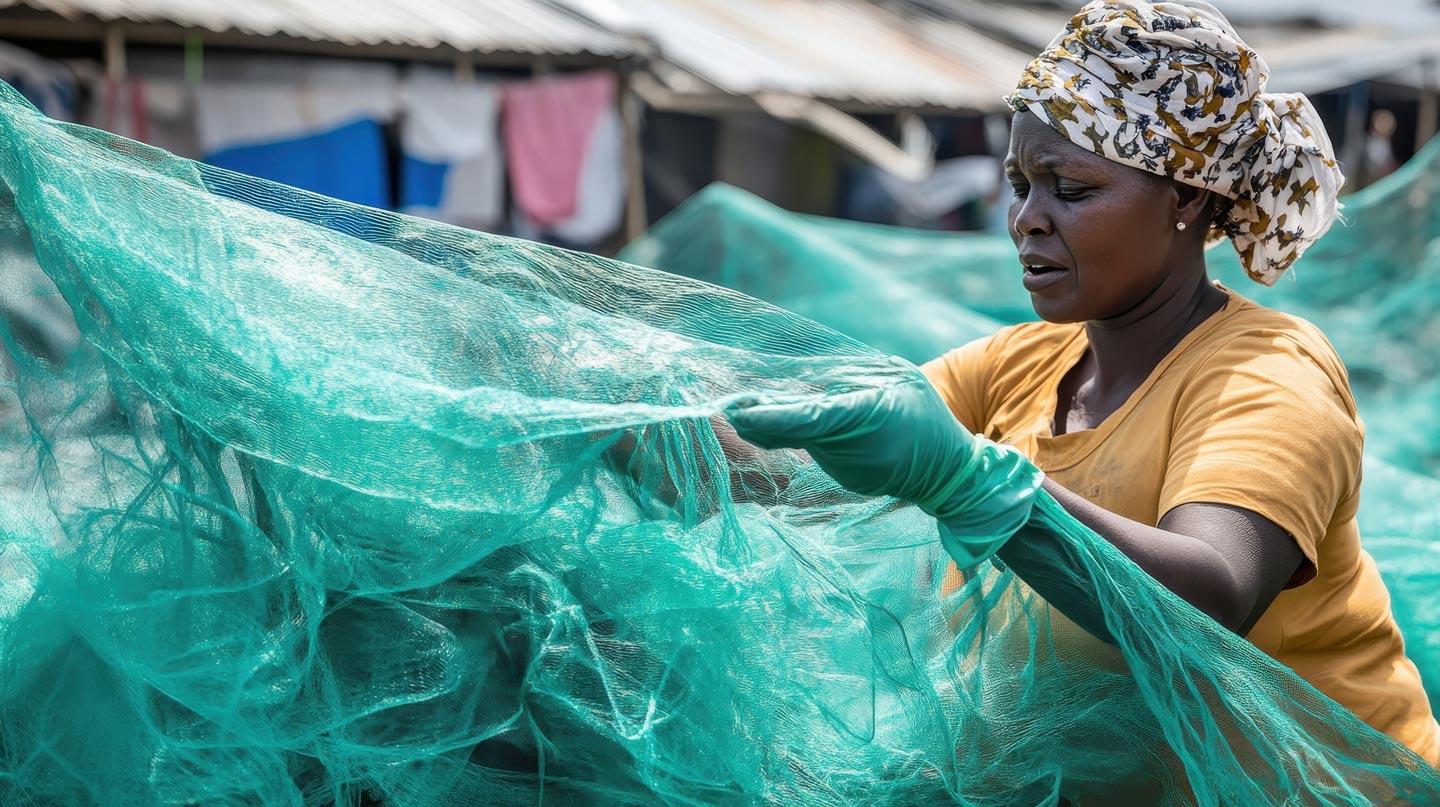
Malaria predominantly affects children under the age of five in sub-Saharan Africa. Some of the most important tools in combating malaria are long-lasting insecticidal nets (LLINs), which between 2000 and 2015 prevented more than 450 million infections. However, an issue arises with the long-term effectiveness of these nets, as they often degrade and develop holes sooner than expected. Thus, more than 50% of people living in endemic areas are at risk, leaving millions of children unprotected. This project aims to contribute to the fight against malaria by advising policy makers on effective and efficient LLIN distribution, while enriching the pool of available tools to combat this disease.
To achieve this goal, the research team is developing a digital tool, ViALLIN, that will allow the routine collection of images of nets and help to assess their condition and durability using an integrated artificial intelligence algorithm. Alongside this, a short questionnaire about the contextual use of the nets will help to further estimate their lifespan. As part of the project, 6,000 LLINs will be distributed in four areas of Tanzania to gather information on how to extend their lifespan, including parameters on resistance to hole formation, mosquito killing capacity and user comfort. Taken together, these findings will be assimilated into Tanzania’s national malaria control programme dashboard, providing essential information for decision makers. Ultimately, the programme hopes to optimize resource use, reduce malaria infections and increase the protection of children.