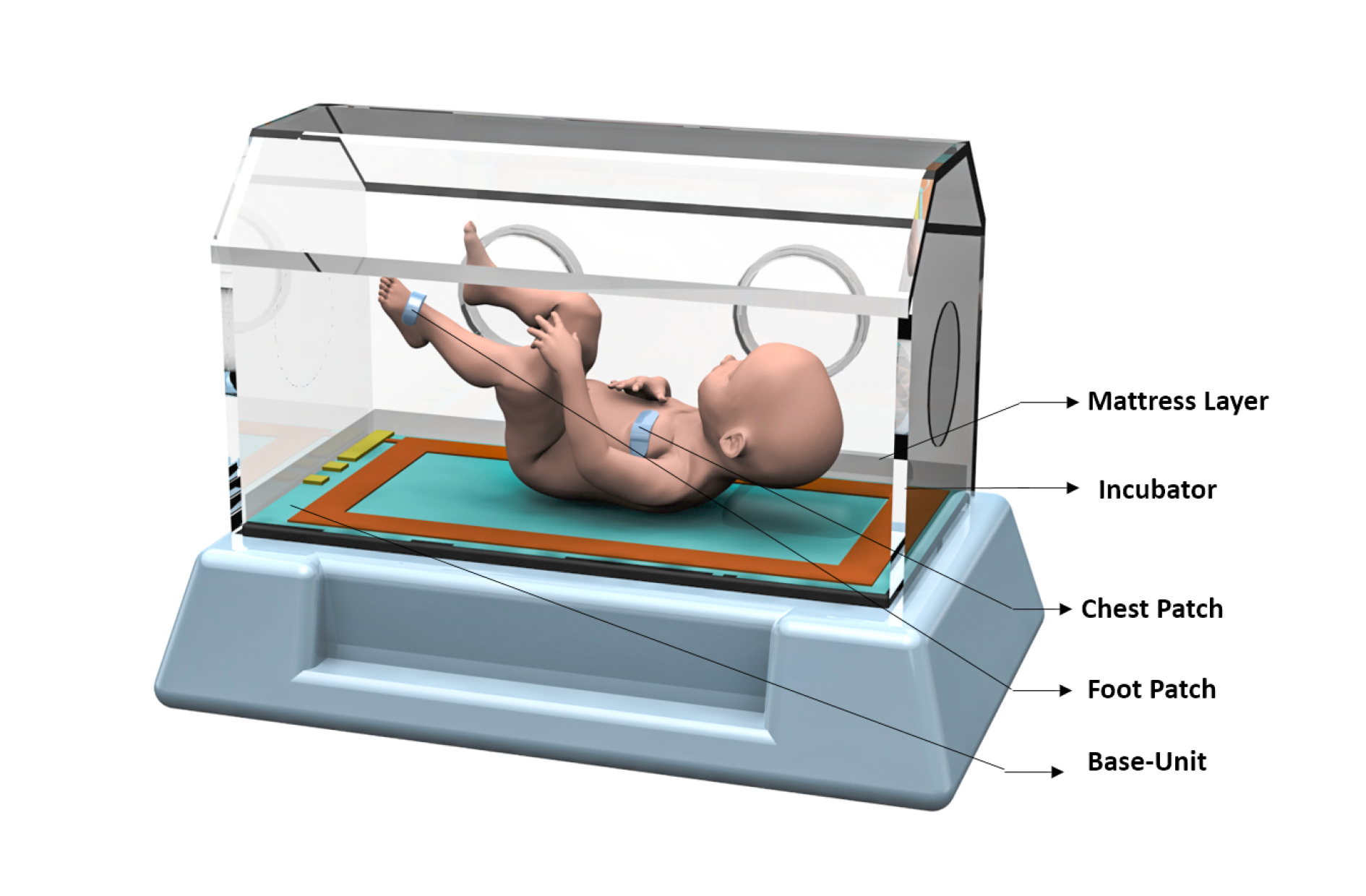
Sepsis is an aberrant immune response to infection and a major cause of mortality in prematurely born infants. It elicits a wide range of symptoms such as an alteration in heart rate, fever and cardiorespiratory uncoupling. To detect the presence of infection and sepsis onset, clinicians rely on laboratory testing and physiological monitoring. Current monitoring devices often involve attaching multiple wires to the infant’s skin, possibly causing lacerations and impeding therapeutically valuable skin-to-skin contact between parent and child.
To overcome the constraints associated with current monitoring devices, this consortium developed a system called PATCH-IT. This wireless, battery-free module consists of two electronic sensors placed on the baby’s chest and foot and provides continuous and real-time data relating to vital signs. It records heart rate variability, respiratory rate, blood oxygenation and localized build-up of fluid among other parameters. Changes in these read-outs are interpreted by a neural network to predict sepsis threat and alert clinicians. While this monitoring device is currently being tested on healthy adult patients, in future it could help to reliably alert clinicians to any threat to the infant’s health. Additionally, the battery-free nature of PATCH-IT renders it suitable for resource-constrained healthcare systems.